
About Chödpa Kunzang Dorjee

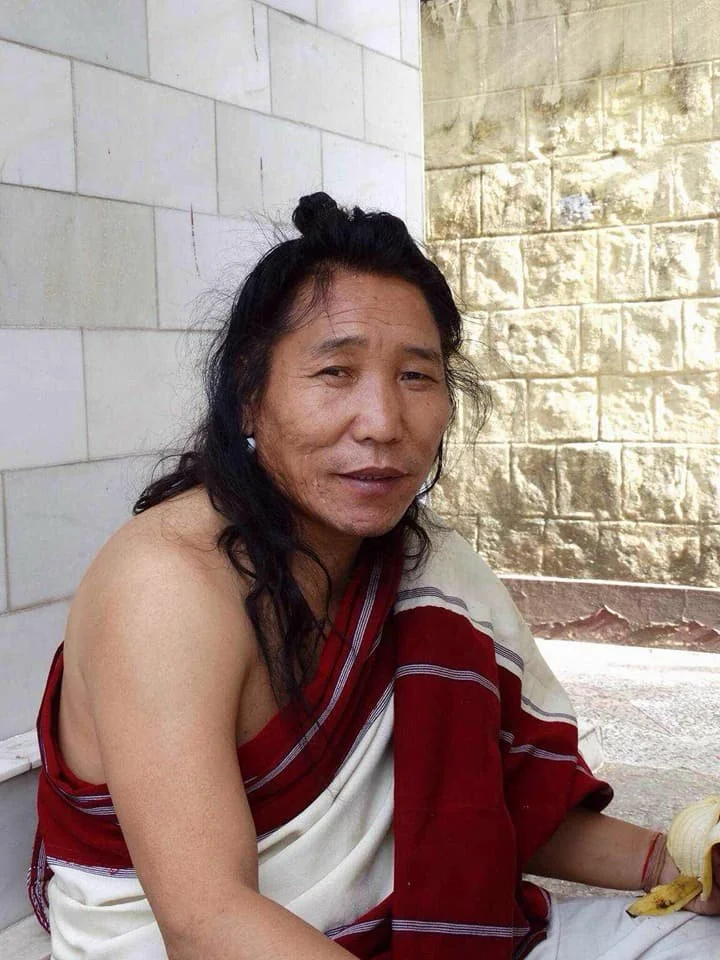
Early years
Chödpa Kunzang Dorjee was born as Sonam Dorjee in Bartso, a village in Tingri, Tibet, near Lankor Monastery — where Padampa Sangye, the founding father of Chöd, once taught. His family has deep roots in the region: an ancestor, the yogi Umkar Tashi, was among those who protected Zirchenshe, the sacred mountain near his birthplace that has drawn pilgrims and retreat practitioners — including Milarepa — for centuries.
At the age of eight or nine, he was sent by his mother from Tibet into exile in India, where he eventually enrolled in the Tibetan Children's Village (TCV) in Dharamsala. An early indication of his future path came when he was brought to Bodhgaya to be tested for monastic ordination and was not selected, a small turning point that pointed toward a different vocation: that of a yogi practicing Chöd.
He graduated from TCV as a civil engineer and worked for several years as a building contractor. Holiday visits to Nepal during this period brought him to the home of his uncle, Ngawang Dorjee, a close student of Lama Wangdu, the now-celebrated Chöd master, where Kunzang Dorjee received his first Chöd teachings.
His formal commitment to the Vajrayana path came through a near-fatal incident in which he was knifed and beaten while intervening to protect a friend. Recovering in the hospital, he recognized that his courage belonged not in street conflicts but in the service of liberating sentient beings from suffering. From that moment, he resolved to enter fully into the life of a Vajrayana practitioner.
Training
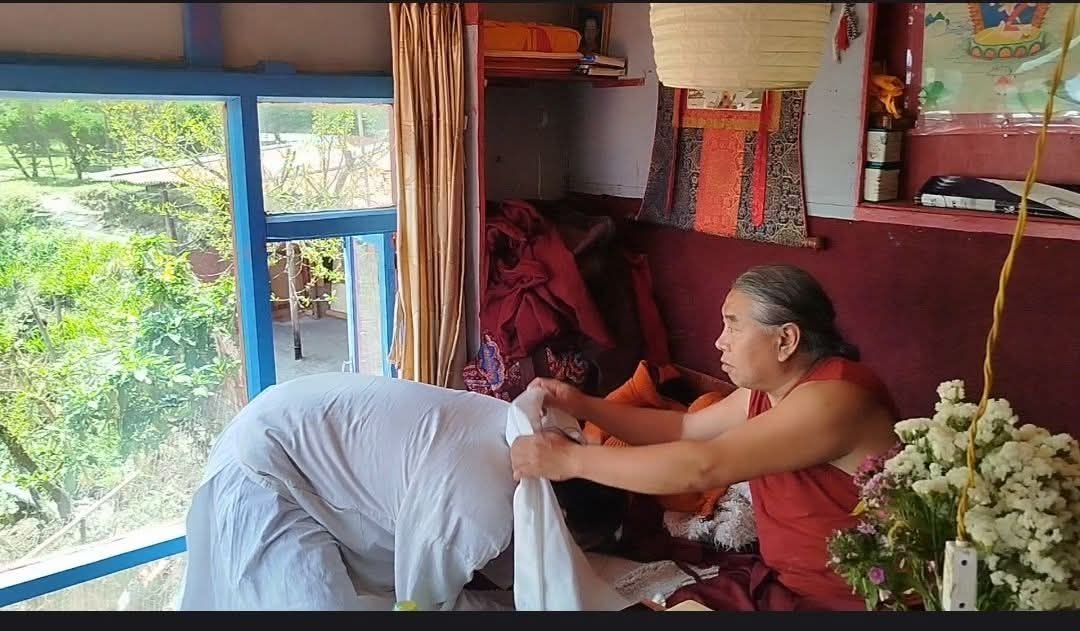
Following his commitment to the Vajrayana path, Kunzang Dorjee sought out Lama Wangdu and formally requested Chöd training. Lama Wangdu accepted, and from that first meeting onward, Kunzang Dorjee attended his daily audiences whenever possible, receiving teachings and empowerments. Over the following years, he received the complete Shije Chöd empowerments (Chöd Wang Gyantsa) from Sangye Nyimba Rinpoche, the twenty-day Nyingthik Yapshi empowerment from Taklung Tsatrul Rinpoche, and the Yunka Dechen Chöd empowerment from Lama Choedak Rinpoche. Returning to Lama Wangdu, he later received the Machig Chöd and the empowerments for Opening the Sky.
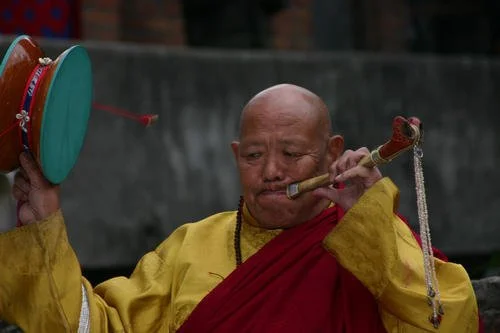
Lama Tsering Wangdu Rinpoche
During a pilgrimage to Labchi, he had an auspicious meeting with the Drikung Drupon, who transmitted Drikung Chöd instructions and, as a mark of the encounter's significance, offered him a highly accomplished yogi's robes that had been passed down through the Drikung lineage, robes that Kunzang Dorjee wore for years in his Chöd practice and occasionally wears to this day.
At Tso Pema, he met Tashi Chojor, a great yogi who became one of his root teachers. From him, he received the complete Dzinpa Rangdrol Chöd, the Longchen Nyingthig Ngöndro, the Kunzang Lamai Shelung, and the Tsokley Rinchen Trengwa. Tashi Chojor instructed him to wander alone from place to place, practicing Chöd in haunted locations without provisions, living on whatever offerings came to him, and this is precisely the path Kunzang Dorjee followed.
From Dungse Garab Dorje Rinpoche and Dudjom Yangsi, he received the Tröma Chöd, being among a select few chosen to receive the Tröma Wangchen, the Great Empowerment.
As Lama Wangdu grew in fame and began spending much of his time in the West, Kunzang Dorjee sought to continue his training.
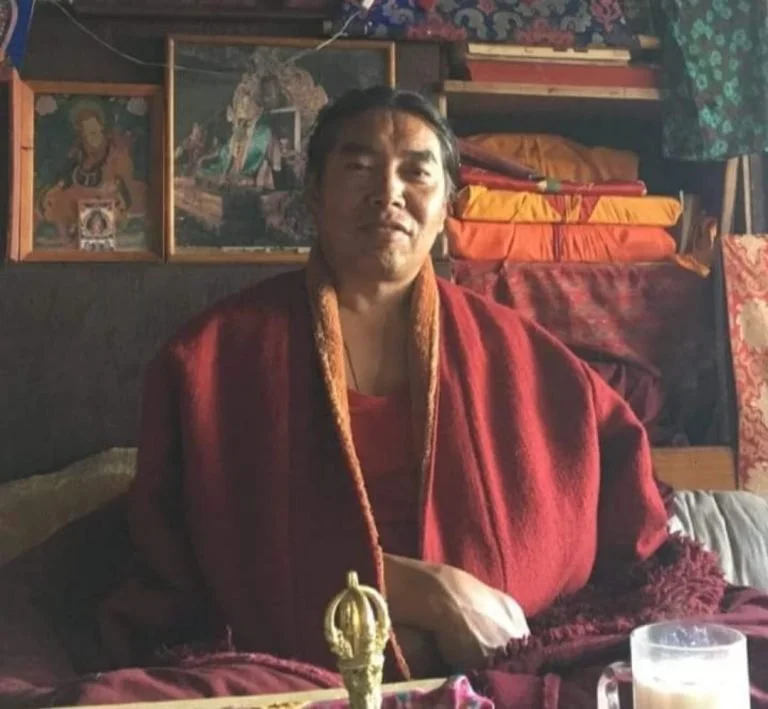
Lama Choedak Rinpoche
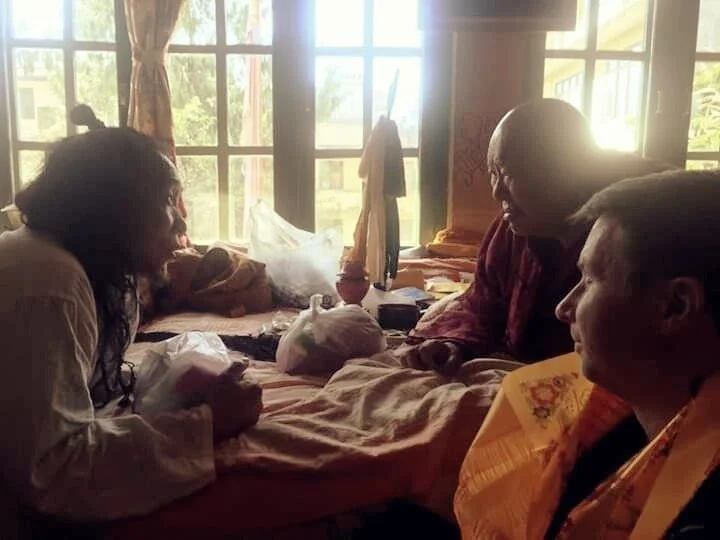
Through a school friend who was Lama Choedak Rinpoche's student, Kunzang Dorjee was introduced to this teacher and went to meet him, bringing his Chöd refuge tree. Their first meeting centered on Lama Choedak's detailed explanation of the refuge field visualization — a response so thorough, learned, and compassionate that it lasted many hours. Deeply impressed, Kunzang Dorjee asked Lama Choedak Rinpoche to be one of his root gurus and was accepted as a student. Since then, he has received a continuous stream of teachings, empowerments, and personal guidance from him.
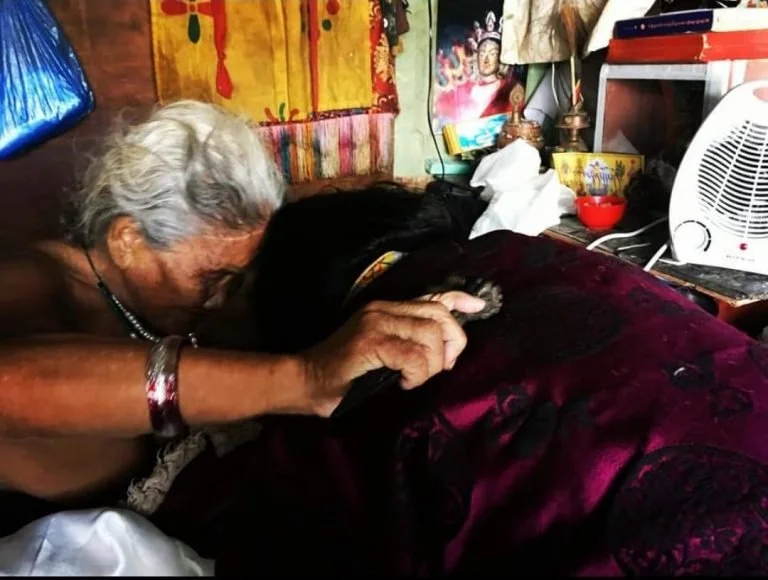
Among Kunzang Dorjee's most cherished teachers was Ani Dawa, affectionately known as Momo la, a renowned hidden Dakini practitioner who lived in full-time retreat in Nagarkot until her passing in 2019. Though she was in her nineties, her knowledge of Chöd and its practice was vast, and she guided Kunzang Dorjee through it with patience and directness, drawing on her own lived experience. Her teachings were deeply practical: she conveyed the power and nature of Chöd not through abstract instruction but through her own direct experiences. She remains one of the major influences on his understanding of the tradition.
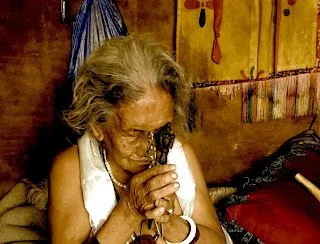
Ani Dawa, Momo la
-
![]()
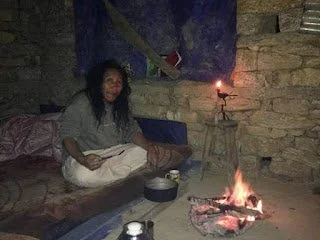
In retreat in Sailong
-
![]()
With Momo la
-
![]()
With Lama Choedak
-
![]()
With Lama Wangdu
Continued Practice
For many years, Kunzang Dorjee has traveled from sacred site to sacred site, practicing Chöd in cemeteries, forests, and remote wilderness according to traditional custom, often alone, without provisions, facing wild animals, extreme weather, and periods without food. Through each of these circumstances, he continued his practice with faith, using Chöd itself as the means to meet whatever arose.
Among the many places he practiced was Princess Mandarava's Cave in Mandi. During a Chöd tsok offering, five roses fell onto his lap from above, which was witnessed by the cave's caretaker, who wept at the sight and said it was a sign of blessing. He also practiced in Sailong, an area long believed by locals to be haunted by a malevolent spirit. During his practice, he spontaneously decided to offer cabbage and milk. The community expressed delight as these were the only offerings that could appease the spirit.
On one occasion, while practicing in a forest grove outside Pashupati, which was used as a children's burial ground, a large red ox charged him from the hills above. Remembering his teacher's instruction, he sounded the Chöd mantra cry of Phat, continued the practice, and held his ground until the animal suddenly stopped.
Throughout this period, he lived without fixed plans or provisions, sustained by occasional offerings from the people he encountered along the way. This was the way of life his teacher, Tashi Chojor, had prescribed, and the conditions within which his practice developed.